

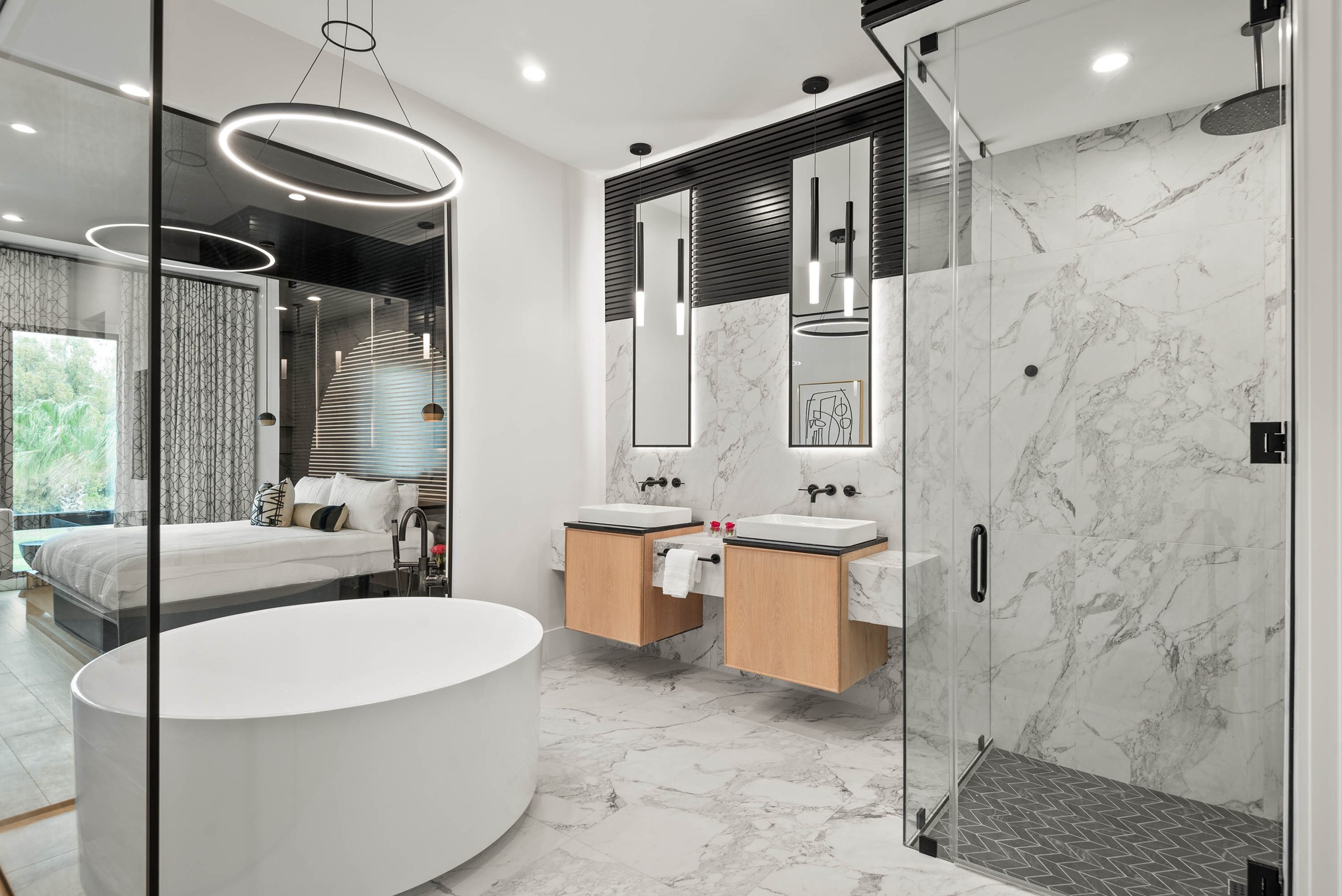
Porcelain countertops in Orlando FL are one of the most durable surface options available today, made from sand, natural clay and minerals fused at extremely high temperatures. NaturaStone fabricates and installs porcelain countertops across Orlando for homeowners who want a surface that resists heat, stains, scratches and Florida sun without the maintenance that natural stone requires.
What Is Porcelain
Porcelain slabs are engineered surfaces created by compressing sand, clay and mineral powders under intense pressure, then firing them at temperatures well over 2,000 degrees Fahrenheit. This sintering process removes almost all porosity from the material, which is why porcelain resists staining without ever needing to be sealed. Porcelain is also measured as roughly 30 percent stronger than granite by industry hardness comparisons, which is part of why it holds up so well in busy kitchens.
Unlike granite or marble, porcelain is not cut from a natural block. The color and pattern are printed or layered onto the surface before firing, which allows manufacturers to replicate the look of marble, concrete or natural stone in a slab that performs very differently in daily use. Porcelain slabs are also manufactured in large formats, up to roughly 126 by 62 inches, which means a kitchen island can often be covered with a single slab and far fewer seams than natural stone allows. Slab installation follows guidelines set by the Tile Council of North America, the primary industry authority for porcelain slab standards.
Porcelain Countertop Finishes
Porcelain slabs are available in several finishes, each suited to different kitchen and bathroom styles.
Matte
A soft, low sheen surface that hides fingerprints and water spots well. Popular in modern and minimalist kitchens.
Polished
A high gloss finish that reflects light and works well for marble look designs where a natural stone shine is the goal.
Glazed
A coated finish that adds extra depth of color and a slight sheen, often used to replicate the veining depth of natural marble.
Textured
A tactile, slightly rough surface that adds grip and works well for outdoor kitchens and bar tops.
Benefits of Porcelain Countertops
- Heat resistant: porcelain can handle hot pans directly from the stove without scorching or discoloring
- Stain resistant: the non porous surface will not absorb wine, oil, coffee or citrus
- Scratch resistant: one of the hardest countertop materials available, standing up well to daily kitchen use
- Never needs sealing: no annual resealing schedule like granite or marble
- UV resistant: will not fade or discolor from direct sunlight, making it a strong choice for Florida homes
- Thin and lightweight: available in slim profiles that work well for waterfall edges and vertical applications
- Fewer seams: large slab sizes mean many kitchen islands need only one continuous piece
Things to Consider
Porcelain is an excellent surface, but it is worth understanding a few tradeoffs before choosing it.
- The color and pattern sit at the surface layer, so a deep chip can expose a different color underneath
- Edge profiles are more limited than natural stone since the slabs are thinner
- Fabrication requires specialized tools and experienced installers, since porcelain is harder to cut than granite or quartz
- Large cracks from heavy impact are difficult to repair compared to a natural stone chip repair
How to Choose the Right Porcelain Countertop
Choosing porcelain for a kitchen or bathroom in Orlando comes down to a few decisions made in order.
1. Decide where it will be installed
Kitchens, bathrooms and outdoor kitchens all place different demands on the material, and outdoor installations benefit most from porcelain’s UV and heat resistance.
2. Pick a finish
Choose between matte, polished, glazed or textured based on the style of the room and how much glare or grip is wanted on the surface.
3. Choose a color family
Decide between a marble look pattern, a solid color or a concrete style finish before viewing individual slabs.
4. Inspect an actual slab in person
Printed patterns can vary between slabs, so viewing the specific slab that will be fabricated is the best way to confirm color and pattern consistency.
5. Confirm edge profile and thickness
Work with a fabricator to select an edge profile that suits the slab thickness, since porcelain has more limited edge options than granite or marble.
Porcelain vs Quartz vs Granite vs Marble
Every material has strengths depending on the room and use case. NaturaStone also fabricates quartz countertops, granite countertops and marble countertops, so the comparison below can help narrow down the right choice before a consultation.
| Feature | Porcelain | Quartz | Granite | Marble |
|---|---|---|---|---|
| Heat resistance | Excellent | Fair | Excellent | Good |
| Sealing required | Never | Never | Yearly | Yearly |
| UV resistance | Excellent | Poor, can yellow outdoors | Excellent | Good |
| Stain resistance | Excellent | Excellent | Good when sealed | Fair, prone to etching |
| Outdoor kitchen use | Ideal | Not recommended | Suitable | Not recommended |
| Installed cost per sq ft | $65 to $160 | $85 to $170 | $45 to $150 | $100 to $220 |
Popular Porcelain Brands and Colors
NaturaStone sources porcelain from leading manufacturers known for consistent quality and a wide range of marble look and solid color options.
- Dekton by Cosentino: known for the Laurent and Rem series, popular for both indoor and outdoor applications
- Neolith: their Calacatta Gold pattern is one of the most requested marble look porcelain colors
- Atlas Plan: offers Marvel Champagne Onyx and Gold Calacatta patterns with a premium Italian finish
- Ariostea: their Ultra Marmi Golden Calacatta line is a favorite for luxury kitchen islands
How Much Do Porcelain Countertops Cost in Orlando
Installed porcelain countertops in Orlando typically range from $65 to $160 per square foot, depending on the brand, slab thickness and edge profile selected. Entry level domestic and Spanish porcelain sits at the lower end of that range, while premium Italian sintered surfaces from brands like Ariostea and Atlas Plan run toward the higher end.
A few factors that affect the final price:
- Slab thickness, typically 6mm or 12mm
- Edge profile complexity, since porcelain requires specialized cutting tools
- Whether the project includes a waterfall edge or full backsplash
- Brand and pattern, with marble look designs generally priced higher than solid colors
Best Uses for Porcelain Countertops in Florida
Porcelain performs especially well in Florida homes because of its resistance to heat, humidity swings and direct sun exposure.
- Kitchen countertops: handles daily cooking heat and acidic ingredients without staining or etching
- Bathroom vanities: resists the humidity and moisture common in Florida bathrooms
- Outdoor kitchens: one of the only surfaces that will not fade, crack or discolor from year round Florida sun, making it a strong choice for lanai and pool area kitchens
Browse the kitchen inspiration gallery or the bathroom design gallery to see completed porcelain and stone projects around Orlando.
Watch: Porcelain Countertop Pros and Cons
Why Choose NaturaStone
NaturaStone has fabricated and installed luxury stone and porcelain surfaces in Orlando since 2014, completing more than 250 projects across kitchens, bathrooms and custom installations. Every porcelain slab is inspected in person before fabrication to confirm veining, color consistency and grade before it reaches a client’s home.
NaturaStone works with homeowners throughout Orlando and the surrounding areas to source boutique porcelain slabs that are not widely available through standard distributors, giving clients access to patterns and finishes that larger fabricators typically do not carry.
Frequently Asked Questions
Is porcelain good for kitchen countertops?
Yes, porcelain is one of the most durable materials available for kitchen countertops in Orlando. It resists heat directly from cookware, does not stain from wine, oil, coffee or citrus, and stands up to daily scratching from knives, pots and everyday kitchen use better than most natural stone options. Because porcelain is non porous after firing, it never needs to be sealed the way granite and marble do, which removes a maintenance step most Orlando homeowners are used to budgeting for every year. It also holds up well in Florida’s humidity and heat, making it a practical long-term choice for busy family kitchens, rental properties, and homes that see frequent cooking and entertaining. Many Orlando homeowners choosing between granite, quartz and porcelain for a kitchen renovation find porcelain appealing specifically because it removes both the sealing schedule and the heat trivet habit from daily routine.
Is porcelain more expensive than quartz or granite?
Porcelain generally falls in a similar overall price range to quartz and granite once installation is included, typically between $65 and $160 per square foot in the Orlando market. Entry level domestic and Spanish porcelain patterns are priced close to standard granite, while premium imported Italian porcelain from brands like Ariostea or Atlas Plan can run higher than most granite and some quartz options. Granite itself ranges from about $45 to $150 per square foot depending on rarity, and quartz typically runs $85 to $170. The exact cost depends on slab thickness, edge profile complexity and whether the project includes features like a waterfall edge, so a firsthand quote is the most accurate way to compare materials for a specific kitchen or bathroom layout. NaturaStone provides free estimates for Orlando homeowners weighing porcelain against other materials, which is often the fastest way to see real numbers side by side before committing to one surface.
Does porcelain need to be sealed?
No, porcelain never requires sealing at any point after installation. The manufacturing process fires porcelain at temperatures well over 2,000 degrees Fahrenheit, which fuses the material into a dense, essentially non porous surface. Granite and marble, by contrast, are natural stone with microscopic pores that allow liquids to soak in over time, which is why they need a sealant reapplied roughly once a year to prevent staining. Porcelain skips that maintenance step entirely, since there is no porosity for liquids like wine, oil or coffee to penetrate. Daily cleaning with mild soap and water is all porcelain needs to stay protected, which is one of the most commonly cited reasons Orlando homeowners choose it over natural stone. This also removes the risk of forgetting an annual reseal, which is the most common way granite and marble countertops develop staining problems over time.
Can porcelain countertops crack or chip?
Porcelain is highly resistant to everyday scratching and impact, and is measured as roughly 30 percent stronger than granite in industry hardness comparisons, but it is not indestructible. A hard, direct hit from a dropped pot or a heavy object can chip the surface layer, and because the color and pattern on many porcelain slabs are printed or layered near the surface rather than running through the entire thickness, a chip can sometimes reveal a different color underneath. This is different from natural stone, where a chip usually exposes the same material all the way through. Careful handling around counter edges and corners, along with professional installation using appropriate support, significantly reduces the chance of this happening in normal household use. NaturaStone fabricators account for this during layout and edge selection, positioning seams and supports to minimize stress points that are most likely to chip over years of daily use.
Is porcelain good for outdoor kitchens in Florida?
Yes, porcelain is one of the best countertop materials available for Florida outdoor kitchens, lanais and pool area bars. Its UV resistance means it will not fade, yellow or discolor after years of direct sun exposure the way some quartz surfaces can, since quartz contains resins that break down under prolonged UV light. Porcelain’s heat resistance also holds up well against grills, outdoor cooktops and the intense surface temperatures Florida sun can create on an uncovered counter. Combined with the fact that porcelain never needs sealing regardless of humidity or rain exposure, it is a practical, low maintenance choice for homeowners building or upgrading an outdoor kitchen anywhere in the Orlando area. Between the year round Florida sun and the humidity swings that come with summer storms, porcelain tends to outperform both quartz and marble for anything installed outside a covered lanai.
How do I clean porcelain countertops?
Cleaning porcelain countertops is simple and does not require special stone cleaning products. A mild soap and warm water, or any standard non abrasive kitchen cleaner, is enough for daily wiping since porcelain does not stain or absorb liquids the way natural stone can. For tougher spots, a soft cloth or non abrasive sponge is usually sufficient, and there is no need to worry about acidic foods like lemon, tomato or vinegar etching the surface the way they can with marble. Because porcelain never needs sealing, there is no annual maintenance schedule to keep track of, which makes it one of the lowest upkeep countertop materials available to Orlando homeowners today. Compared to marble, which can etch from something as simple as a splash of orange juice, porcelain owners generally spend far less time worrying about what touches the counter during everyday cooking.
Is porcelain better than quartz for a kitchen island?
Both porcelain and quartz are strong choices for a kitchen island, and the right answer depends on how the island will be used. Porcelain offers better heat resistance, so it can handle hot pans set down directly without a trivet, and it will not yellow if the island sits near a sunny window. Porcelain slabs are also manufactured in larger formats, which often means fewer visible seams across a wide island surface. Quartz offers a slightly wider range of solid, uniform colors and can be easier to source locally for quick turnaround projects. For an island that gets heavy daily cooking use or sits in direct sunlight, porcelain is generally the stronger long term choice. NaturaStone can walk through both options side by side during a consultation, since the right material often comes down to how the island is actually used day to day rather than appearance alone.
Ready to explore porcelain countertops for your Orlando kitchen or bathroom? Contact us today at NaturaStone in Orlando.